

Where did the growth go?
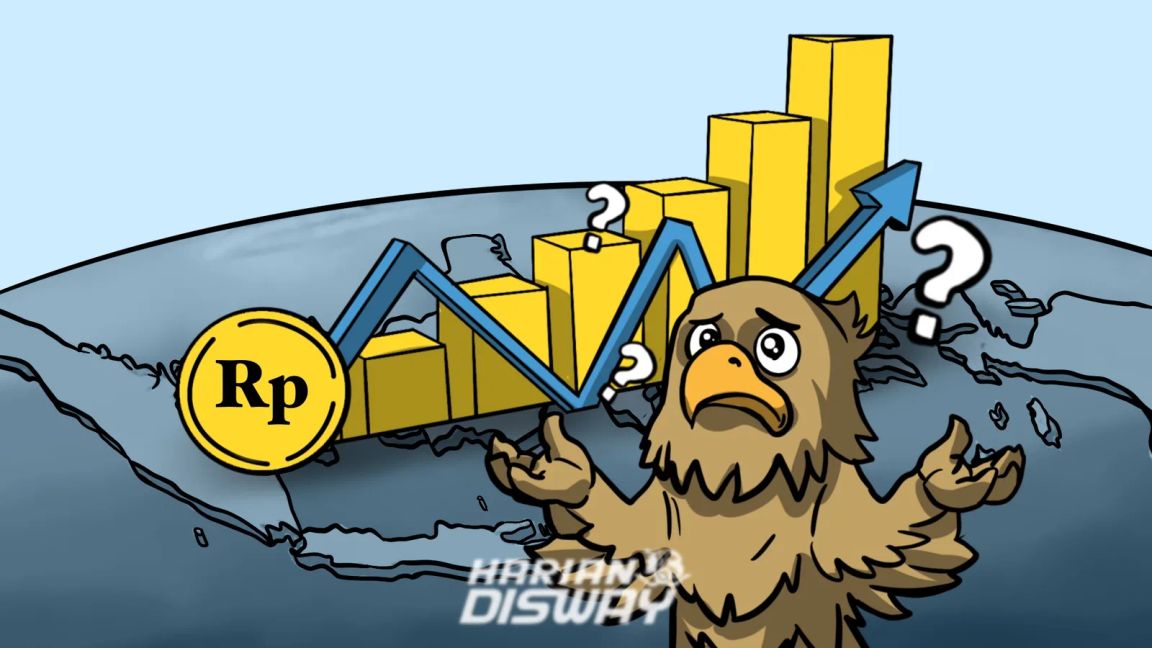
Indonesia grows about 5 percent a year, yet real wages fell from 2018 to 2024. The chain from investment to wages breaks at several points at once.
On this page
Indonesia’s economy grows by about 5 percent a year. Investment comes in and jobs are created. The numbers look healthy.
Yet from 2018 to 2024, the World Bank records, workers’ real wages fell by an average of 1.1 percent a year, and skilled workers’ by 2.3 percent. Those two numbers should not move together. In Indonesia they do.
The question is not whether we grow. It is why the growth does not turn into wages.
A chain that breaks in several places
The fault lies in the design of the growth itself. In the theory we keep repeating, the chain is simple: investment comes in, jobs are created, productivity rises, wages follow, purchasing power strengthens, consumption moves and growth continues. In Indonesia the chain breaks at several points at once, and when one link breaks, the next fails with it.
Capital does come in. Investment grew 4.6 percent in 2024. But it follows the incentives on offer: tax holidays for mineral processing, easy permits for labour-intensive industrial estates, tax cuts for semi-finished exports. Under the current policy design, the most rational path leads to commodities, smelters and low-wage industrial zones. That investment is legal, but it is weighted to sectors that add little value. Growth is created, but it stays concentrated and does not spread into broad gains in productivity.
Cheap jobs, unused skills
Between August 2024 and August 2025, BPS records that every additional job came from low-wage sectors: agriculture, accommodation, and food and drink. Their average wage is Rp2.55 million a month, against a national average of only Rp3.33 million. A nickel smelter in Sulawesi employs thousands of people on pay close to the provincial minimum wage, while the value it adds flows to the concession holders and to buyers abroad.
When the fastest-growing industries need few skills, the job market on offer needs few skills too. Universities turn out information systems graduates, but the domestic technology sector is too small to take them all. Vocational schools train welders and mechanics, while the fastest-growing work is in warehousing, ride-hailing and fast food. Vocational graduates end up in garment factories and engineering graduates become administrative staff, not for lack of ability but because jobs that match their qualifications do not exist in enough number.
Ha-Joon Chang warned long ago that a country stuck supplying cheap labour and raw materials will struggle to move up, whatever its growth rate. When educated workers are absorbed into jobs that do not use their skills, public spending on education leaks too.
Wages that rise only on paper
When skills go unused, productivity does not move, and when productivity does not move, companies have no economic reason to raise pay. Raises come only through the administrative route: the minimum wage is lifted and the number adjusted. Real gains need productivity: the McKinsey Global Institute estimates that Indonesia needs productivity growth of 4.9 percent a year to reach high-income status by 2045, one and a half times what it achieved over the past two decades.
The 2026 provincial minimum wage rose 6 to 7 percent, above inflation, officials say. But official inflation does not capture the costs that press hardest on working households: rent, food, transport and school fees. They all rise faster than the official figure. The minimum wage can rise on paper while real wages keep falling in real life.
A wage rise without productivity behind it also pushes back. Large companies cope through efficiency and automation. Small businesses have no such room, so they cut hours, hold back hiring or move into the informal economy. The Ministry of Manpower recorded 78,000 layoffs in 2024, up from 64,900 in 2023, and the share of informal workers rose again.
Where the chain becomes a trap
BPS counts the middle class falling from 57 million people in 2019 to 47.85 million in 2024, and Mandiri Institute sees it shrinking further to 46.7 million in 2025: almost 10 million people moved down in six years. Average balances in savings accounts under Rp100 million fell 40 percent between 2019 and 2024. Savings shrank because basic needs take a growing share of income that does not move.
Household consumption makes up 54 percent of GDP. The middle class accounted for 43 percent of that consumption in 2019 and only 38 percent in 2024. Our growth engine depends on the spending of a group whose purchasing power keeps shrinking. Consumer goods sales confirm it: Unilever Indonesia, the largest consumer goods company with around 35 percent of its market, saw sales fall from Rp41.2 trillion in 2022 to Rp35.1 trillion in 2024, 15 percent in two years, for the most basic products: soap, shampoo and cooking spices.
Spending room is narrowing, with millions of households putting off purchases at the same time. One by one, each delay is rational. Together, they take away the economy’s main source of drive. Weaker consumption slows growth, slower growth narrows the government’s fiscal room, and narrower fiscal room limits what it can do for productive industry. Productivity stays stuck, wages stay flat, and the cycle repeats.
A worker on the Jakarta minimum wage takes home Rp5.39 million a month. After rent and transport, almost nothing is left to save. That worker is not the exception. They stand for millions who do everything we call the way up, working, keeping discipline, holding on, and still do not move up.
What needs fixing is not their work ethic. It is the design of the engine: where investment is directed, what kinds of jobs are created, and whether the growth we celebrate reaches the income of the people who drive it. Until that changes, the question of where the growth went will keep getting the same answer: into sectors never connected to the income of most workers.